

Since its inception, Microsoft’s low-code development Power Platform has been positioned as a fast learning, low barrier to entry solution for many organizations. Citizen developers are able to quickly develop apps and workflows to help digitize and streamline their business processes. Given the simplicity, it begs the question whether governance is required for the Power Platform. I recently ran a LinkedIn poll, where nearly 30% of respondents indicated that the organization they work for don’t actively govern their Power Platform.
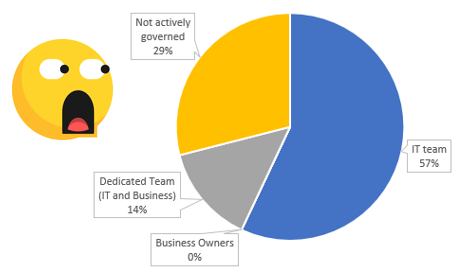
These results are an indication that some organizations don’t understand what the Power Platform offers its users or choose to open up it to their employees and let them use it at will. While this behaviour empowers users to develop their own solution and creates a Citizen Developer culture , it still needs proper governance.
Power Platform enables users to create apps, workflows, and chatbots that can do a lot. The simplicity with which such solutions are developed is by design, but it also means that the solutions that users may inadvertently have a negative impact. Consider, for example
- John created a solution that require Power App per User licenses and shared it with his entire department. Now, everyone is running on trial licenses that are about to expire and need to procure full licenses. These costs, which the organization may have to absorb, may not have been budgeted for.
- Sally has built a clean-up Power Automate flow that deletes some old document in a SharePoint library. What she didn’t realize is that it is deleting a lot more than she expected (and is also altering some other documents in the process).
- Larry is sending sensitive information outside the organization
Establishing a Power Platform governance doesn’t happen overnight and requires careful planning and consideration. A governing body will have to be created, who will develop, review, and revise its policies on an ongoing basis. Setting standards and monitoring the platform against them will become an ongoing process.
One of the first steps in developing such governance is gaining an understanding of the current state. The sooner that such a current state assessment is determined, the better because adopting a governance framework into a functioning requires careful consideration of what is already in place. Many of my clients that wanted to establish a Power Platform governance initially told me that a current state assessment is not really required because internal communications hasn’t provided information on it and it hasn’t been “rolled out”. To their dismay, I often ended up proving them wrong.
A thorough Power Platform Assessment needs to cover some key questions:
- What components have been deployed? This may include a combination of Power Apps, Power Automate flows, Power Virtual Agents, and Power BI dashboards and reports, Dataverse instances, On-premises data gateways, and custom connectors.
- Why are these components needed? Some of them may solve problems that were implemented in different systems or even Power Platform components.
- Who has access and who should have access to them? Building an app or workflow for personal use is one thing. But sharing it with everyone in the organization is a different story.
- When are workflows running? Are large batch jobs running during critical times that can impact the network or process data that is still being updated during business hours?
- Where are these components deployed? If I have to hedge my bet, I would say that in most cases, most are in the organization’s Default environment.
- How are these solutions built, deployed, shared, version controlled, and decommissioned?
So now that I have hopefully convinced you that you need a Power Platform governance, I will share some articles on how to begin gathering key information for your Power Platform Assessment.
Please check back regularly on updates to this article.

 Haniel Croitoru